
GDP Growth: Rise in Banana Production Signals New Direction for Indian Agriculture
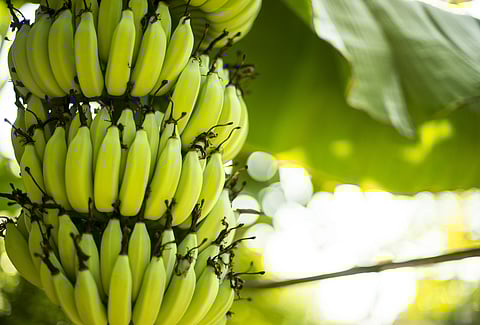
India’s agricultural landscape is witnessing a significant shift, with banana production emerging as a major contributor to both the food sector and the national economy. According to recent data, bananas now account for 10.7% of the total fruit and vegetable production in the country—a steady rise from 10.5% in 2022–23 and 9% in 2011–12.
This consistent growth highlights the increasing importance of banana cultivation in India’s agri-economy. Notably, the share of bananas in the country’s Gross Domestic Product (GDP) has now reached 2.95%. This marks a major development, as mangoes had held the top spot in this segment from 2011 to 2022. With this shift, bananas have strengthened their position, contributing significantly to agricultural income and rural livelihoods.
The transformation is not limited to fruits alone. India’s spice sector is also undergoing a dynamic change. Since 2017–18, spices—particularly chillies—have consistently held a larger share in total agricultural production compared to pulses. In 2023–24, the overall share of spices in food production is projected to reach 5.9%, with chillies alone contributing 1.32%.
These evolving trends reflect a broader shift in Indian agriculture toward high-yield and economically sustainable crops. The data serves as a valuable indicator for agricultural policymakers, signaling the need to move beyond traditional staples and embrace crops that offer better returns and greater global demand.
The rise of bananas and spices like chillies as economic drivers suggests a promising future for farmers willing to diversify. As the agricultural sector adapts to changing market dynamics, such developments could play a key role in shaping a more resilient and profitable rural economy.