
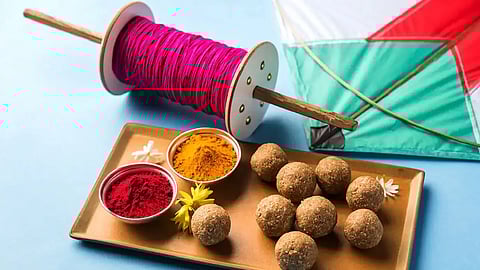
Why is the Makar Sankranti festival celebrated? Learn about the tradition and significance of the three-day festival
Makar Sankranti, which comes at the beginning of the new year, is a festival associated with agriculture, nature, and tradition. During this time, the joy of new crops in the fields is shared among women. This practice of giving grains to each other is known as Sugad. In Maharashtra, this festival is celebrated for three days: Bhogi, Sankranti, and Kinkranti.
On the day of Makar Sankranti, the color black holds special significance. Therefore, women make it a point to wear black sarees. Haldi-Kumkum ceremonies are also held with great enthusiasm, culminating on Ratha Saptami.
According to mythology, Goddess Sankranti destroyed demons and provided relief to the people, which is why this day is celebrated as a festival. From a geographical perspective, on this day, the sun enters the Capricorn sign. From this period, the days gradually become longer and the nights shorter. This is considered the beginning of Uttarayana. Makar Sankranti is a festival in the Hindu tradition whose date does not change every year. This festival, which heralds the change of seasons, is celebrated across the country in various ways but with equal joy.
In Brief
• Makar Sankranti festival celebrated at the beginning of the New Year
• Strong connection with agriculture, nature, and tradition
• Celebration of the new harvest in the fields
• Tradition of women distributing grains
• The practice of giving grains to each other is known as ‘Sugad’
• Makar Sankranti is celebrated for three days in Maharashtra
• The three-day form includes Bhogi, Sankranti, and Kinkranti